
What Happened
EPA’s Service Line Inventory Dashboard indicates1 that drinking water utilities2 have reported to states the address or location of:
- 2,188,277 lead service lines (LSL);
- 1,002,773 galvanized requiring replacement (GRR) service lines; and
- 22,450,443 lead status unknown services lines (“Unknown”).3
Beginning in November 2024 and annually thereafter, utilities have been required4 to send each of these 25.6 million customers a special lead notice5 informing them about their service line’s: 1) designation as either LSL, GRR, or Unknown; 2) the health effects of lead, steps to take to reduce exposure to lead; and 3) opportunities to replace the line or verify its status. Customers with LSLs were also told that the utility must replace its portion of the service line if the customer alerts them of plans to replace their portion (usually the part on private property.)
Beginning in November 2027, utilities are generally required6 to replace at least 10% of the LSLs and GRRs in their system that they can access to the full line. The utilities must also make reasonable efforts to get customers’ permission to access these service lines. Customers may deny access. To support this effort, the special lead notice must also: 1) explain if the utility intends for customers to pay for part of the replacement cost; and 2) provide instructions for the customer to notify the utility if they disagree with the service line material classification.
New customers—typically those buying the property—would receive special lead notices when the service is initiated. If the homeseller had previously denied the utility permission to replace the LSL or GRR, the utility must offer full replacement to the new owner within six months and make reasonable efforts to get access within one year.
In this blog, Unleaded Kids explains that in most states, we think the special lead notices trigger a duty for a homeseller to inform potential buyers that the property has a service line classified as LSL or GRR. We recognize that it may not be happening. However, if the homeseller fails to disclose, the buyer should be able to recover the cost of the replacement as well as other damages. Where the service line is categorized as Unknown, the homeseller’s responsibilities are less clear.
Why It Matters
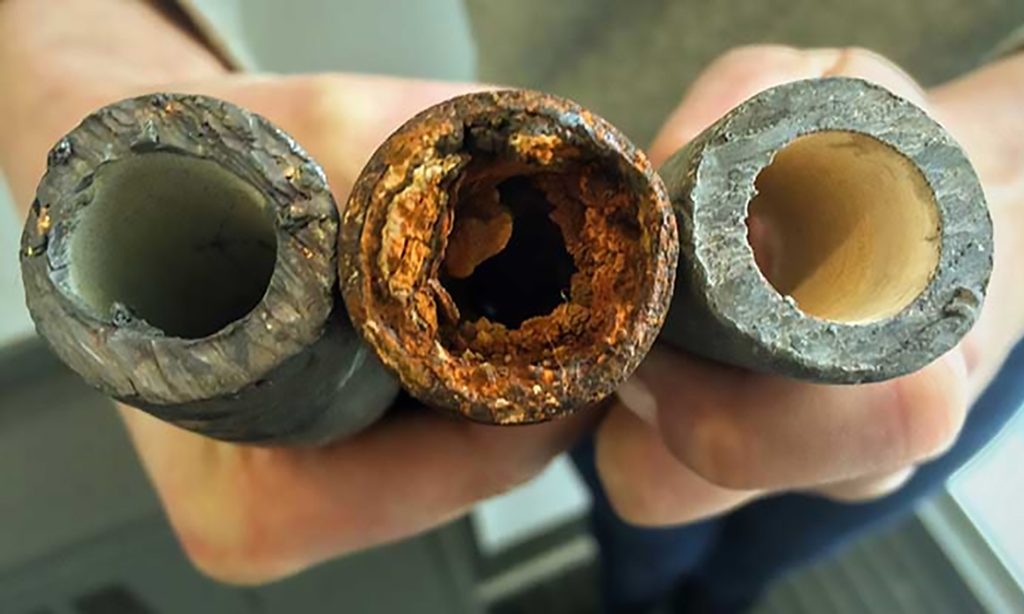
LSLs are the most significant source of lead in drinking water. For the past decade, the consensus among scientists and policymakers has been that the best approach to protect residents is to fully replace the service line.
If a homeseller is required to disclose the presence of an LSL or GRR to potential buyers, the service line is more likely to be replaced as part of the transaction. Even if the buyer chooses not to replace the line at the time of sale, they may be more likely to cooperate when the utility approaches them offering to share the replacement cost at the time they are replacing LSLs in the neighborhood.
Does Disclosure Work?
A 2019 study by Cornell University and the Environmental Defense Fund (EDF) found that home buyers (and renters) were more likely to take action when told they may have an LSL. The study was based on more than 2,200 participants who were advised that the cost to replace the LSL would be $1,000 to $5,000.
An EDF blog describing the study said that reported levels of perceived risk and willingness to act were consistently high when potential buyers were told the home has an LSL. Regardless of the words used in the disclosure, buyers wanted to deduct the cost or have sellers replace the LSL. Other options such as looking for another home, adding the cost to the mortgage, or paying for replacement were less popular. Buyers were unwilling to leave the LSL alone.
Even if the disclosure is only that the lead status of the service line is unknown, the study suggests that buyers are more likely to investigate the situation and make an informed decision about replacement.
Do Homesellers Have a Duty to Inform Potential Buyers?
Yes, if they know or should know of the LSL or GRR. With the special lead notice and other publicly available information, it is difficult to argue ignorance.
The threshold issue is whether the homeseller knew or should have known an LSL or a GRR was present. The homeseller should have already received two annual notices with more to come. In addition, all utilities must make address-level information for each service line publicly available. Most utilities—and at least seven states7—make the information available online in maps or search tools.
We recognize that homesellers may have missed or ignored the notices. However, they typically have a duty to review their records and conduct other due diligence before putting their home on the market. This review should reveal the presence of an LSL or GRR.
At least 10 states8 specifically require disclosure of lead pipes. We base this on a 2017 EDF report indicating that nine states mandate disclosure of the pipe material. In addition, we are aware of one additional state, New Jersey, that strengthened their lead pipe disclosure laws by enacting S829 in 2021. The law required the states to add a question concerning the presence of lead plumbing in residential properties. The state revised its rules to add the question to the form in 2022.
In another 27 states, EDF found that disclosure is mandated if the lead pipe would be considered a defect, deficiency, or hazard. We think LSLs and GRRs qualify based on the documented health risks and EPA’s rule mandating eventual removal. In addition, most utilities will expect the property owner to pay some of the cost, which can run more than $10,000, making it a material.
The remaining states9 do not explicitly require homesellers to disclose problems, relying on a caveat emptor policy. However, these states may expect real estate agents to disclose. In addition, courts may consider the failure to disclose to be fraudulent if the:
- Seller knows the home contains a material defect not readily seen by the buyer and that could pose a health or safety risk to the buyer, or
- Buyer directly questions the seller on specific defects.
In these states, we think a buyer could make a strong case for fraud since LSLs would likely be considered a material defect not readily seen by the buyer and pose a health risk to the buyer.
For more state-specific information, we encourage you to check with Zillow, the online property information service popular with both buyers and sellers. The firm has a webpage that provides a useful summary as well as links to disclosure requirements in all states.10
How Does It Differ from Lead-based Paint
The disclosure for LSLs and GRRs is based on state, not federal, law. For lead-based paint, federal rules explicitly require homesellers to discuss what is known. However, homesellers typically do not have specific knowledge that their home has lead-based paint. They likely only know that lead-based paint may be present if the house if built before 1978. In this situation, the federal rules explicitly allow homesellers to claim ignorance—and almost everyone does.
What Happens if Homesellers Do Not Inform Potential Buyers?
Zillow provides some helpful context. It says, “Disclosure laws are designed to protect buyers from purchasing a home with serious flaws and to protect sellers from future legal ramifications. So, it’s important that sellers take disclosures seriously. If you attempt to hide a defect in your home and get caught, you can be sued by the buyer for nondisclosure, which can include:
- Paying for damages suffered: For example, if there was a health hazard, you could be required to pay for medical bills.
- Paying for repairs: Even after closing, you may be required to go back and pay for repairs on the property related to the known defect.”
Can Buyers Rely on a Home Inspector to Look for an LSL or GRR?
No. Two major organizations certify home inspectors: American Society of Home Inspectors (ASHI) and International Association of Certified Home Inspectors (InterNACHI). The ASHI Standard of Practice requires certified home inspectors to describe the materials used in interior water supply distribution systems. This would appear to cover only plumbing and not the service line. The InterNACHI Standard of Practice is even weaker. It does not cover the material used in plumbing.
Even if the organizations did cover service line materials, many states do not require home inspectors to be certified—or even state licensed.
Note that the Cornell/EDF study described above, surprisingly, found that explicit recommendations from a home inspector to replace the LSL, and the presence of information about risk about LSLs, did not further influence levels of perceived risk or willingness to act. In some cases, including specific recommendations may have backfired. One possible explanation for this may be due to a perception that the home inspector could somehow benefit from the replacement.
How Would a Buyer Find Out the Homeseller Failed to Disclose?
State laws vary on how quickly a buyer must act when learning that a homeseller failed to disclosure a material defect like LSLs or GRRs. However, an alert buyer is likely to find out quickly since the utility must provide a special lead notice when they switch the service line to them.
If the prior owner denied the utility permission to replace the LSL or GRR, the utility is required to provide an additional notice to new owner within six months and must use at least two methods of communication in the first year. The methods of communication are: 1) in-person conversation, 2) phone call, 3) text message, 4) email, 5) written letter, 6) postcard, 7) information left at the door such as a door hanger.
The utility may provide additional notices if the utility has exceeded the lead action level, fallen behind on its mandatory replacement rate, or is disturbing the service line.
Note that homesellers may claim that the buyer should have known that the service line was a LSL or GRR. Whether this defense is a sufficient to avoid liability will depend on state law.
What Is Lead Status is Unknown?
The homeseller’s obligation to disclose that the utility has categorized that lead status of the service line as unknown depends on state law. The disclosure is more likely to be required in the ten states that require that homesellers tell buyers what material the plumbing is made of.11
Our Take
We recognize that homesellers may not be currently disclosing the presence of an LSL or GRR because they were unaware of the special lead notice from the utility, do not see lead pipe as a material defect or hazard, or simply were relying on their realtor to alert them. However, that does not relieve them of their responsibility under state law to disclose.
Most likely the issue will explode in the news when a buyer successfully challenges a homeseller’s failure to disclose and recovers not only the replacement cost but also damages from the exposure to lead.
We recommend that homesellers avoid the potential liability and disclose the presence of a LSL, GRR, unknown service line. In addition, real estate agents for buyers should advise them to ask about the issue before making an offer on the home.
- Based on EPA’s Online Service Line Inventory Dashboard on September 1, 2026, where the only type of public water system (PWS) selected was CWS. There were a total of 102,595,293 service lines with 75% classified as non-lead. The numbers in the other two types of PWSs were small: 190 LSLs, 3,295 GRRs, and 10,061 unknowns. For more information on EPA’s Dashboard, see Unleaded Kids December 10, 2025 blog. ↩︎
- We refer to community water systems (CWS) as utilities because that is how most customers identify them. ↩︎
- In November 2025, EPA estimated that roughly 4.15% of the Lead Status Unknown service lines would later be recategorized as LSL or GRR with the balance designated as “Non-Lead.” ↩︎
- Based on EPA’s Lead and Copper Rule (LCR) revisions signed in December 2020 and published January 15, 2021. The next Administration delayed implementation by 11 months, establishing a compliance data of October 16, 2024. ↩︎
- There are many lead-related notices under the LCR. For simplicity, we are calling this notice a special one to distinguish it from the others. Follow the link to see specifics of the special lead notice. ↩︎
- Based on EPA’s LCR Improvements, signed in October 2024. ↩︎
- EDF identifies the states with address-level maps of service line information as Arizona, Georgia, Indiana, Minnesota, New York, Utah, and Vermont. ↩︎
- The ten states requiring disclosure of plumbing material are CT, DE, IL, MI, NJ, NM, NC, NY, PA, SC, and WI. ↩︎
- The 12 states that do not appear to explcitly require disclosue are AL, AR, GA, NH, ND, MA, MO, MT, UT, VT, VA, and WY. ↩︎
- Note that Zillow has not yet collected the publicly available, address-specific service line information provided by utilities to states. If it took that step, it would likely dramatically increase LSL replacement. ↩︎
- The ten states requiring disclosure of plumbing material are CT, DE, IL, MI, NJ, NM, NC, NY, PA, SC, and WI. ↩︎